

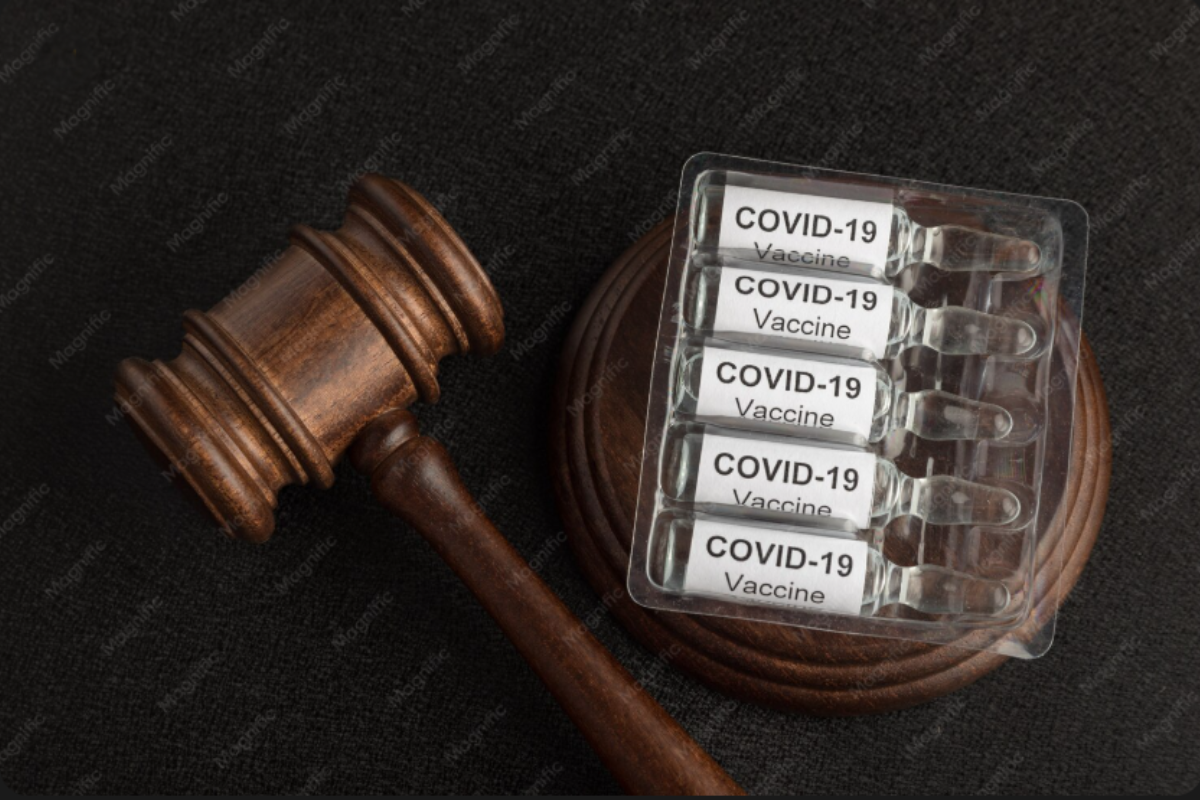
The pandemic [as declared by the W.H.O.] NOVEL COVID 19 has wreaked havoc across the globe and experts say is yet to peak. The same has resulted into loss of lives majorly in Europe, Iran and China. Whenever such epidemics, pandemics come, questions arise as to the effects of the same not only on human lives but also on the economy, businesses, courts, running of factories and companies, lives of daily wagers and day to day lives.
This article focuses on two aspects firstly, the legal aspects and effects on functioning of courts and secondly, the laws in place to deal with pandemics, epidemics and diseases.
On the first aspect, since the outbreak various courts, bar councils and bar associations of various High Courts, Tribunals and also the Supreme Court Bar Association and the Supreme Court Advocates-on-Record Association have been issuing circulars, notifications and public notices for information of lawyers and litigants. If one happens to read each and every one of them, it smacks of inconsistencies between the circulars, notifications and public notices issued by different authorities and also the same are vague, unclear and unspecific.
In pandemic and epidemic outbreaks, the problem does not remain local but is national. So firstly, instead of different courts, state bar councils, different bar associations publishing different and contradictory circulars, notifications and public notices, the Hon’ble Supreme Court of India as the top court of the land in conformity with the Bar Council of India must issue circulars, notifications and public notices and guidelines applicable across the board to avoid confusion, uncertainty and ambiguity.
Secondly, coming on to the content of the said circulars, notifications and public notices and guidelines, the same as stated are vague and unclear to say the least. For example, they state that only ‘urgent’ matters will be heard and rest will be deferred to avoid crowding of courts. There is no definition of ‘urgent’ matters. A matter may be urgent for a litigant or an Advocate even though it might be a routine civil case for instance.
A much simpler way would have been three-fold:
- Complete shut-down of courts barring ‘urgent’ matters with ‘urgency’ as may be defined / spelt out with no adverse orders to be passed due to absence of a party or an Advocate or otherwise.
- Relaxation of limitation for fresh and pending matters thereby ensuring closing of registries and filing counters with ban on misc., registry works like application for certified copies, file inspections and filing of process fee etc.
- Complete ban on entry of interns and litigants with closure of canteens and shops in court premises.
Coming on to the second aspect i.e., the existing and extant laws governing epidemics, pandemics etc. The relevant laws existing on the statute books in India is the archaic Epidemic Diseases Act, 1897. India’s Central Government and state governments are empowered to regulate health-related matters. The Epidemic Diseases Act, 1897 is the main legislative framework at the central level for the prevention and spread of dangerous epidemic diseases.
The Act empowers the central government to take necessary measures to deal with dangerous epidemic disease at ports of entry and exit. The Act also empowers the states to take special measures or promulgate regulations to deal with epidemics within their state jurisdictions.
Firstly, this Act needs whole scale revision and / or the same needs to be repealed with a new legislation which meets and deals with the situations in the modern and technological era. The Epidemic Diseases Act of 1897 is ‘a century-old blunt act’ that needs a ‘substantial overhaul to counter the rising burden of infectious diseases both new and old.’ Some of the issues that require revisiting are the definition of epidemic disease, territorial boundaries, ethics and human rights principles, empowerment of officials, and punishment.
Secondly, the states also have different laws which gives rise to confusion and inconsistencies. Health as a subject falls under the State List under the Constitution of India, 1950. This also needs to be changed and this subject ought to fall under the concurrent list. In situations like the present one, a uniform enactment is needed with one uniform agency dealing with the said Act and implementing the same on the ground.
A much larger public discussion and debate is needed on the aforementioned issues. Every situation no matter how adverse gives us an opportunity to revisit the existing systems and structures on how to improve it for good. Surely, the present pandemic of NOVEL COVID 19 has thrown up numerous questions which need to be answered in due course.
BY: MAREESH PRAVIR SAHAY, ADVOCATE
The Author is an Advocate-on-Record with the Supreme Court of India. The views expressed are personal.